Good Molecules vs. The Ordinary
2025-11-27

I'm sure you've heard of The Ordinary—unless you've been living in a cave 😉. It was one of the first brands to spotlight ingredients and straightforward formulations. Their products are famously effective, and the best part: they're incredibly affordable.
Since then, other ingredient-focused brands have joined the market, such as Naturium, The Inkey List, and Good Molecules—each with its own unique style.
Today, let's look at two of the most popular: Good Molecules vs. The Ordinary.
Similarities Between The Ordinary & Good Molecules
Both brands rely on well-studied, proven ingredients. Their formulas are simple, purposeful, and focused on delivering results without unnecessary additives.
Because of this approach, you'll easily find products that address specific skin concerns. And importantly, both brands are cruelty-free, with several vegan options available.
What Makes Them Different?
- ❯ Product Naming: The Ordinary names its products after the active ingredients—great for skincare enthusiasts, but confusing for beginners. Good Molecules takes a more user-friendly approach by naming products after their goals, like “Brightening.”
- ❯ Product Range: The Ordinary offers skincare, hair care, and even makeup. Good Molecules sticks exclusively to skincare.
- ❯ Packaging: The Ordinary uses minimalist black-and-white designs. Good Molecules leans into bright, colorful packaging that almost feels cosmic.
Differences Within the Products Themselves
Both brands have standout formulas, but there are notable contrasts.
One of Good Molecules' top sellers is the Niacinamide Brightening Toner (check out our review here) —a blend of Niacinamide, Arbutin, Vitamin C, and Licorice. It's an effective all-in-one brightening formula, and The Ordinary doesn't offer anything directly comparable.
Good Molecules also offers fewer Vitamin C and Retinol products. However, their Retinol options are especially good for sensitive skin.
Retinol and Vitamin C are two of the most researched anti-aging ingredients. Here's how the two brands differ:
Retinol
The Ordinary mainly offers Retinol or Retinoid serums and face oils.
Good Molecules doesn't offer a Retinol serum at all. Instead, they have: A Retinol moisturizer (great for beginners or sensitive skin), Face oils with Bakuchiol, a plant-based alternative to Retinol.
- ❯ Pros: gentler, less irritating
- ❯ Cons: not as extensively researched
Vitamin C
Good Molecules has only one Vitamin C product: Vitamin C Boosting Powder, very similar to The Ordinary's 100% L-Ascorbic Acid Powder.
Acids
The Ordinary offers a huge selection of acid-based products—simple, effective, and budget-friendly. Examples include:
- ❯ The Ordinary: Azelaic Acid Suspension 10%
- ❯ The Ordinary: Salicylic Acid 2% Solution
- ❯ The Ordinary: Lactic Acid 5% + HA
- ❯ The Ordinary: Lactic Acid 10% + HA
- ❯ The Ordinary: Mandelic Acid 10% + HA
Good Molecules takes a different approach, with two unique acid treatments:
- ❯ A Salicylic Acid moisturizer—a gentle choice for acne-prone skin
- ❯ An overnight AHA + BHA treatment that combines multiple exfoliating acids
There are more differences, of course, but these are the most important ones when comparing the two brands.
Let's Talk About Similar Products...
The Ordinary: Squalane Cleanser vs. Good Molecules: Instant Cleansing Balm
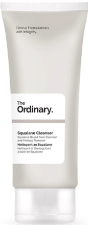
THE ORDINARY
Squalane Cleanser
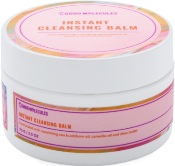
GOOD MOLECULES
Instant Cleansing Balm
SIMILARITIES
If you double cleanse, both products work perfectly as the first step. They're gentle and suitable for all skin types.
DIFFERENCES
The Ordinary’s Squalane Cleanser is formulated with Squalane, a skin-identical emollient derived from plant oils like olive oil. Good Molecules’ Instant Cleansing Balm uses a fatty acid ester base (palmitic acid + a soothing fatty alcohol) and includes small amounts of nourishing plant oils.
CONCLUSION
Both cleansers have the same goals—effective makeup removal, gentle cleansing, and added hydration. The main difference lies in the core ingredients: Squalane vs. fatty acid esters.
Good Molecules: Hyaluronic Acid Serum vs. The Ordinary: Hyaluronic Acid 2% + B5
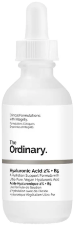
THE ORDINARY
Hyaluronic Acid 2% + B5
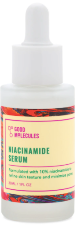
GOOD MOLECULES
Hyaluronic Acid Serum
SIMILARITIES
Both products rely on Hyaluronic Acid, a powerful humectant that attracts water to the skin and improves plumpness and hydration.
DIFFERENCES
The Ordinary’s formula contains 18 ingredients, including two forms of hyaluronic acid (Sodium Hyaluronate Crosspolymer and Sodium Hyaluronate) plus Panthenol (Vitamin B5) to support the skin barrier. Good Molecules’ serum is simpler, with 10 ingredients and one form of hyaluronic acid (Sodium Hyaluronate).
CONCLUSION
Good Molecules’ version is extremely minimalistic—ideal for very sensitive or reactive skin. The Ordinary adds more hydrating and barrier-supporting ingredients, making it slightly more complex but still highly effective. Both offer great hydration.
Good Molecules: Niacinamide Serum vs. The Ordinary: Niacinamide 10% + Zinc 1%
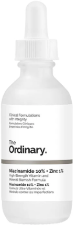
THE ORDINARY
Niacinamide 10% + Zinc 1%
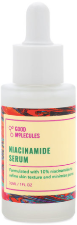
GOOD MOLECULES
Niacinamide Serum
SIMILARITIES
Niacinamide is an excellent multitasking ingredient suitable for nearly every skin type—dry, oily, combination, acne-prone, hyperpigmented, or with enlarged pores. Both serums contain 10% Niacinamide.
DIFFERENCES
The Ordinary includes Zinc, an absorbent mineral that helps reduce excess oil—great for oily or acne-prone skin, but not ideal for dry skin. Good Molecules leaves Zinc out, making it more suitable for dry or balanced skin types.
CONCLUSION
Both formulas deliver the benefits of Niacinamide, but your skin type should guide your choice: Oily skin → The Ordinary; Dry or normal skin → Good Molecules.
Good Molecules: Daily Brightening Serum vs. The Ordinary: Alpha Arbutin 2% + HA
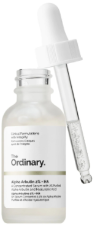
THE ORDINARY
Alpha Arbutin 2% + HA
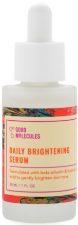
GOOD MOLECULES
Daily Brightening Serum
SIMILARITIES
Both serums contain Arbutin, a well-researched brightener that helps fade hyperpigmentation caused by hormones, UV exposure, or post-inflammatory discoloration.
DIFFERENCES
Good Molecules includes Licorice Root Extract, a promising brightening ingredient that targets discoloration. The Ordinary combines Arbutin with Hyaluronic Acid to boost hydration.
CONCLUSION
If hyperpigmentation is your main concern, Good Molecules may be the more targeted option. If you want brightening + extra hydration, The Ordinary is a great choice.
To Sum Up
The Ordinary and Good Molecules appear similar at first glance—both rely on proven ingredients and straightforward, effective formulations.
But when you compare product by product, the differences become clearer. Depending on your skin type and goals, it's worth exploring both brands to find the perfect match for your routine.
Discover more products from The Ordinary here and Good Molecules here.