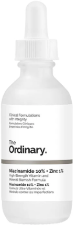
PRODUCT CHARACTERISTICS
EFFECTS ON SKIN FROM INGREDIENTS
By skin type

oily skin
2
2 good ingredient(s) for Oily Skin:
#2: NIACINAMIDE
#4: ZINC PCA
0 bad ingredient(s) for Oily Skin:
💡 PRO-TIP 1: Focus especially on the first five ingredients (#1-#5) — they make up most of the formula. The remaining ingredients have barely any effect on the skin (there are exceptions).
💡 PRO-TIP 2: It is pretty much possible for anyone to have skin reactions to anything/ any ingredient. Therefore test new products carefully (small amounts, patch tests on small areas of the skin).

combination skin
2
2 good ingredient(s) for Combination Skin:
#2: NIACINAMIDE
#4: ZINC PCA
0 bad ingredient(s) for Combination Skin:
💡 PRO-TIP 1: Focus especially on the first five ingredients (#1-#5) — they make up most of the formula. The remaining ingredients have barely any effect on the skin (there are exceptions).
💡 PRO-TIP 2: It is pretty much possible for anyone to have skin reactions to anything/ any ingredient. Therefore test new products carefully (small amounts, patch tests on small areas of the skin).

dry skin
1
1
1 good ingredient(s) for Dry Skin:
#2: NIACINAMIDE
1 bad ingredient(s) for Dry Skin:
#4: ZINC PCA
💡 PRO-TIP 1: Focus especially on the first five ingredients (#1-#5) — they make up most of the formula. The remaining ingredients have barely any effect on the skin (there are exceptions).
💡 PRO-TIP 2: It is pretty much possible for anyone to have skin reactions to anything/ any ingredient. Therefore test new products carefully (small amounts, patch tests on small areas of the skin).
By skinconcern

dehydrated skin
2
2 good ingredient(s) for Dehydration:
#2: NIACINAMIDE
#3: PENTYLENE GLYCOL
0 bad ingredient(s) for Dehydration:
💡 PRO-TIP 1: Focus especially on the first five ingredients (#1-#5) — they make up most of the formula. The remaining ingredients have barely any effect on the skin (there are exceptions).
💡 PRO-TIP 2: It is pretty much possible for anyone to have skin reactions to anything/ any ingredient. Therefore test new products carefully (small amounts, patch tests on small areas of the skin).

acne prone skin
1
1 good ingredient(s) for Acne Prone Skin:
#2: NIACINAMIDE
0 bad ingredient(s) for Acne Prone Skin:
💡 PRO-TIP 1: Focus especially on the first five ingredients (#1-#5) — they make up most of the formula. The remaining ingredients have barely any effect on the skin (there are exceptions).
💡 PRO-TIP 2: It is pretty much possible for anyone to have skin reactions to anything/ any ingredient. Therefore test new products carefully (small amounts, patch tests on small areas of the skin).

sensitive skin
2
2 good ingredient(s) for Sensitive Skin:
#2: NIACINAMIDE
#4: ZINC PCA
0 bad ingredient(s) for Sensitive Skin:
💡 PRO-TIP 1: Focus especially on the first five ingredients (#1-#5) — they make up most of the formula. The remaining ingredients have barely any effect on the skin (there are exceptions).
💡 PRO-TIP 2: It is pretty much possible for anyone to have skin reactions to anything/ any ingredient. Therefore test new products carefully (small amounts, patch tests on small areas of the skin).

anti-aging
1
1 good ingredient(s) for Anti-Aging:
#2: NIACINAMIDE
0 bad ingredient(s) for Anti-Aging:
💡 PRO-TIP 1: Focus especially on the first five ingredients (#1-#5) — they make up most of the formula. The remaining ingredients have barely any effect on the skin (there are exceptions).
💡 PRO-TIP 2: It is pretty much possible for anyone to have skin reactions to anything/ any ingredient. Therefore test new products carefully (small amounts, patch tests on small areas of the skin).

fungal acne
No key ingredients
0 good ingredient(s) for Fungal Acne:
0 bad ingredient(s) for Fungal Acne:
💡 PRO-TIP 1: Focus especially on the first five ingredients (#1-#5) — they make up most of the formula. The remaining ingredients have barely any effect on the skin (there are exceptions).
💡 PRO-TIP 2: It is pretty much possible for anyone to have skin reactions to anything/ any ingredient. Therefore test new products carefully (small amounts, patch tests on small areas of the skin).
By skinconcern

clogged pores
No key ingredients
0 good ingredient(s) for Clogged Pores:
0 bad ingredient(s) for Clogged Pores:
💡 PRO-TIP 1: Focus especially on the first five ingredients (#1-#5) — they make up most of the formula. The remaining ingredients have barely any effect on the skin (there are exceptions).
💡 PRO-TIP 2: It is pretty much possible for anyone to have skin reactions to anything/ any ingredient. Therefore test new products carefully (small amounts, patch tests on small areas of the skin).
acne, pimples
No key ingredients
0 good ingredient(s) for Acne, Pimples:
0 bad ingredient(s) for Acne, Pimples:
💡 PRO-TIP 1: Focus especially on the first five ingredients (#1-#5) — they make up most of the formula. The remaining ingredients have barely any effect on the skin (there are exceptions).
💡 PRO-TIP 2: It is pretty much possible for anyone to have skin reactions to anything/ any ingredient. Therefore test new products carefully (small amounts, patch tests on small areas of the skin).

large pores
1
1 good ingredient(s) for Large Pores:
#2: NIACINAMIDE
0 bad ingredient(s) for Large Pores:
💡 PRO-TIP 1: Focus especially on the first five ingredients (#1-#5) — they make up most of the formula. The remaining ingredients have barely any effect on the skin (there are exceptions).
💡 PRO-TIP 2: It is pretty much possible for anyone to have skin reactions to anything/ any ingredient. Therefore test new products carefully (small amounts, patch tests on small areas of the skin).

dull skin
No key ingredients
0 good ingredient(s) for Dull Skin:
0 bad ingredient(s) for Dull Skin:
💡 PRO-TIP 1: Focus especially on the first five ingredients (#1-#5) — they make up most of the formula. The remaining ingredients have barely any effect on the skin (there are exceptions).
💡 PRO-TIP 2: It is pretty much possible for anyone to have skin reactions to anything/ any ingredient. Therefore test new products carefully (small amounts, patch tests on small areas of the skin).

pigmentation
1
1 good ingredient(s) for Pigmentation:
#2: NIACINAMIDE
0 bad ingredient(s) for Pigmentation:
💡 PRO-TIP 1: Focus especially on the first five ingredients (#1-#5) — they make up most of the formula. The remaining ingredients have barely any effect on the skin (there are exceptions).
💡 PRO-TIP 2: It is pretty much possible for anyone to have skin reactions to anything/ any ingredient. Therefore test new products carefully (small amounts, patch tests on small areas of the skin).
COMEDOGENIC & RISK RATING
Hover over the doughnut for more information!
Hover over the doughnut for more information!
FULL INGREDIENT LIST
👉 The product The Ordinary Niacinamide 10% + Zinc 1% contains 11 ingredients in total.
👉 The Ordinary Niacinamide 10% + Zinc 1% is alcohol-free, fragrance-free, silicone-free, paraben-free, oil-free, mineral oil-free.
👉 It doesn't contain moderate to high comedogenic ingredients. Comedogenic ingredients are believed to clog pores. But this is not always true, since several factors - such as the product formulation (= how the product is 'cooked') - have to be considered as well.
👉 Based on the safety rating of the organization CIR, the product The Ordinary Niacinamide 10% + Zinc 1% doesn't contain unsafe ingredients.
👉 Here's the full ingredient list: Aqua, Niacinamide, Pentylene Glycol, Zinc PCA, Dimethyl Isosorbide, Tamarindus Indica Seed Gum, Xanthan gum, Isoceteth-20, Ethoxydiglycol, Phenoxyethanol, Chlorphenesin
👉 The Ordinary Niacinamide 10% + Zinc 1% contains the following superstar ingredients:
∙ Niacinamide
| Ingredient | Comedogenic | Risk | Function |
|---|---|---|---|
1. AQUA | no data | no data | SOLVENT |
2. NIACINAMIDE | no data | Safe as used | SMOOTHING |
3. PENTYLENE GLYCOL | no data | Safe as used | SKIN CONDITIONING, SOLVENT |