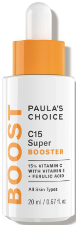
PRODUCT CHARACTERISTICS
EFFECTS ON SKIN FROM INGREDIENTS
By skin type

oily skin
1
1 good ingredient(s) for Oily Skin:
#10: SODIUM HYALURONATE
0 bad ingredient(s) for Oily Skin:
💡 PRO-TIP 1: Pay extra attention to the first 5 ingredients (#1 - #5) of the ingredient list. They make up most of the product. The remaining ingredients have barely any effect on the skin (there are exceptions).
💡 PRO-TIP 2: It is pretty much possible for anyone to have skin reactions to anything/ any ingredient. Therefore test new products carefully (small amounts, patch tests on small areas of the skin).

combination skin
1
1 good ingredient(s) for Combination Skin:
#10: SODIUM HYALURONATE
0 bad ingredient(s) for Combination Skin:
💡 PRO-TIP 1: Pay extra attention to the first 5 ingredients (#1 - #5) of the ingredient list. They make up most of the product. The remaining ingredients have barely any effect on the skin (there are exceptions).
💡 PRO-TIP 2: It is pretty much possible for anyone to have skin reactions to anything/ any ingredient. Therefore test new products carefully (small amounts, patch tests on small areas of the skin).

dry skin
1
1 good ingredient(s) for Dry Skin:
#14: PANTHENOL
0 bad ingredient(s) for Dry Skin:
💡 PRO-TIP 1: Pay extra attention to the first 5 ingredients (#1 - #5) of the ingredient list. They make up most of the product. The remaining ingredients have barely any effect on the skin (there are exceptions).
💡 PRO-TIP 2: It is pretty much possible for anyone to have skin reactions to anything/ any ingredient. Therefore test new products carefully (small amounts, patch tests on small areas of the skin).
By skinconcern

dehydrated skin
6
6 good ingredient(s) for Dehydration:
#3: BUTYLENE GLYCOL
#5: GLYCERIN
#8: PENTYLENE GLYCOL
#10: SODIUM HYALURONATE
#14: PANTHENOL
#16: ORYZA SATIVA BRAN EXTRACT
0 bad ingredient(s) for Dehydration:
💡 PRO-TIP 1: Pay extra attention to the first 5 ingredients (#1 - #5) of the ingredient list. They make up most of the product. The remaining ingredients have barely any effect on the skin (there are exceptions).
💡 PRO-TIP 2: It is pretty much possible for anyone to have skin reactions to anything/ any ingredient. Therefore test new products carefully (small amounts, patch tests on small areas of the skin).

acne prone skin
No notable ingredients
0 good ingredient(s) for Acne Prone Skin:
0 bad ingredient(s) for Acne Prone Skin:
💡 PRO-TIP 1: Pay extra attention to the first 5 ingredients (#1 - #5) of the ingredient list. They make up most of the product. The remaining ingredients have barely any effect on the skin (there are exceptions).
💡 PRO-TIP 2: It is pretty much possible for anyone to have skin reactions to anything/ any ingredient. Therefore test new products carefully (small amounts, patch tests on small areas of the skin).

sensitive skin
2
1
2 good ingredient(s) for Sensitive Skin:
#14: PANTHENOL
#15: BISABOLOL
1 bad ingredient(s) for Sensitive Skin:
#2: ASCORBIC ACID
💡 PRO-TIP 1: Pay extra attention to the first 5 ingredients (#1 - #5) of the ingredient list. They make up most of the product. The remaining ingredients have barely any effect on the skin (there are exceptions).
💡 PRO-TIP 2: It is pretty much possible for anyone to have skin reactions to anything/ any ingredient. Therefore test new products carefully (small amounts, patch tests on small areas of the skin).

anti-aging
4
4 good ingredient(s) for Anti-Aging:
#2: ASCORBIC ACID
#9: TOCOPHEROL
#13: FERULIC ACID
#16: ORYZA SATIVA BRAN EXTRACT
0 bad ingredient(s) for Anti-Aging:
💡 PRO-TIP 1: Pay extra attention to the first 5 ingredients (#1 - #5) of the ingredient list. They make up most of the product. The remaining ingredients have barely any effect on the skin (there are exceptions).
💡 PRO-TIP 2: It is pretty much possible for anyone to have skin reactions to anything/ any ingredient. Therefore test new products carefully (small amounts, patch tests on small areas of the skin).

fungal acne
2
0 good ingredient(s) for Fungal Acne:
2 bad ingredient(s) for Fungal Acne:
#7: PEG-40 HYDROGENATED CASTOR OIL
#12: LECITHIN
💡 PRO-TIP 1: Pay extra attention to the first 5 ingredients (#1 - #5) of the ingredient list. They make up most of the product. The remaining ingredients have barely any effect on the skin (there are exceptions).
💡 PRO-TIP 2: It is pretty much possible for anyone to have skin reactions to anything/ any ingredient. Therefore test new products carefully (small amounts, patch tests on small areas of the skin).
By skinconcern

clogged pores
No notable ingredients
0 good ingredient(s) for Clogged Pores:
0 bad ingredient(s) for Clogged Pores:
💡 PRO-TIP 1: Pay extra attention to the first 5 ingredients (#1 - #5) of the ingredient list. They make up most of the product. The remaining ingredients have barely any effect on the skin (there are exceptions).
💡 PRO-TIP 2: It is pretty much possible for anyone to have skin reactions to anything/ any ingredient. Therefore test new products carefully (small amounts, patch tests on small areas of the skin).
acne, pimples
No notable ingredients
0 good ingredient(s) for Acne, Pimples:
0 bad ingredient(s) for Acne, Pimples:
💡 PRO-TIP 1: Pay extra attention to the first 5 ingredients (#1 - #5) of the ingredient list. They make up most of the product. The remaining ingredients have barely any effect on the skin (there are exceptions).
💡 PRO-TIP 2: It is pretty much possible for anyone to have skin reactions to anything/ any ingredient. Therefore test new products carefully (small amounts, patch tests on small areas of the skin).

large pores
1
1 good ingredient(s) for Large Pores:
#10: SODIUM HYALURONATE
0 bad ingredient(s) for Large Pores:
💡 PRO-TIP 1: Pay extra attention to the first 5 ingredients (#1 - #5) of the ingredient list. They make up most of the product. The remaining ingredients have barely any effect on the skin (there are exceptions).
💡 PRO-TIP 2: It is pretty much possible for anyone to have skin reactions to anything/ any ingredient. Therefore test new products carefully (small amounts, patch tests on small areas of the skin).

dull skin
1
1 good ingredient(s) for Dull Skin:
#2: ASCORBIC ACID
0 bad ingredient(s) for Dull Skin:
💡 PRO-TIP 1: Pay extra attention to the first 5 ingredients (#1 - #5) of the ingredient list. They make up most of the product. The remaining ingredients have barely any effect on the skin (there are exceptions).
💡 PRO-TIP 2: It is pretty much possible for anyone to have skin reactions to anything/ any ingredient. Therefore test new products carefully (small amounts, patch tests on small areas of the skin).

pigmentation
1
1 good ingredient(s) for Pigmentation:
#2: ASCORBIC ACID
0 bad ingredient(s) for Pigmentation:
💡 PRO-TIP 1: Pay extra attention to the first 5 ingredients (#1 - #5) of the ingredient list. They make up most of the product. The remaining ingredients have barely any effect on the skin (there are exceptions).
💡 PRO-TIP 2: It is pretty much possible for anyone to have skin reactions to anything/ any ingredient. Therefore test new products carefully (small amounts, patch tests on small areas of the skin).
COMEDOGENIC & RISK RATING
Hover over the doughnut for more information!
Hover over the doughnut for more information!
FULL INGREDIENT LIST
👉 The product Paula's Choice C15 Super Booster contains 21 ingredients in total.
👉 Paula's Choice C15 Super Booster is alcohol-free, fragrance-free, silicone-free, paraben-free, mineral oil-free.
👉 Here's the full ingredient list: Water, Ascorbic Acid, Butylene Glycol, Ethoxydiglycol, Glycerin, PPG-26-Buteth-26, PEG-40 Hydrogenated Castor Oil, Pentylene Glycol, Tocopherol, Sodium Hyaluronate, Hexanoyl Dipeptide-3 Norleucine Acetate, Lecithin, Ferulic Acid, Panthenol, Bisabolol, Oryza Sativa Bran Extract, Propyl Gallate, Sodium Gluconate, Sodium Hydroxide, Phenoxyethanol, Ethylhexylglycerin
👉 Paula's Choice C15 Super Booster contains following superstar ingredients:
∙ A form of hyaluronic acid
∙ A form of vitamin C
∙ Panthenol
| Ingredient | Comedogenic | Risk | Function |
|---|---|---|---|
1. WATER | no data | no data | ANTIPLAQUE, SKIN CONDITIONING, SOLVENT |
2. ASCORBIC ACID | no data | no data | ANTIOXIDANT, BUFFERING, FRAGRANCE, SKIN CONDITIONING |
3. BUTYLENE GLYCOL | 1 | Safe as used | FRAGRANCE, HUMECTANT, SKIN CONDITIONING, SOLVENT, VISCOSITY CONTROLLING |